|
 |
 |
|
We built a home my husband and I, not to be old or new,just to be beautiful. And we built it for music. ~ Lucie Rosen
|
The History of Rosen House
The Rosen Collection ~ The Rosen House Today
 |
| |
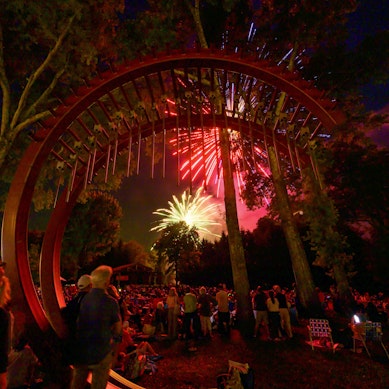
Caramoor is the legacy of Walter and Lucie Rosen, who established the estate and built a great house as its centerpiece, filling it with treasures collected on their travels. Walter Rosen was the master planner, bringing to reality his dream of creating a place to entertain friends from around the world. Their legendary musical evenings were the seeds of today’s Summer Music Festival that is held annually on the estate.
Walter Rosen’s friend Charles Hoyt first introduced the Rosens to the estate. Hoyt’s mother had an estate in Katonah, a village in the town of Bedford, New York that she was looking to sell. It was named after her – “Caramoor” for Caroline Moore Hoyt. Charles Hoyt, a collector like Walter Rosen, certainly knew of his love for all things Italian. The Hoyt estate, which was more than 100 acres, had a beautifully laid-out Italianate garden, with rows of tall cedars mimicking the ubiquitous cypresses of Italy. The Rosens fell in love with this garden, still found at Caramoor today, and bought the property.
The Caramoor property was purchased in 1928 by the Rosens as a summer home and country retreat. Both were passionate collectors and accomplished musicians. From 1929 to 1939, Mr. Rosen designed and built the rambling stucco villa now known as the Rosen House.
 |
| The Music Room |
The Rosens furnished their mansion with their vast collection of European and Asian art and furnishings. Noteworthy are the 15th-century Spanish Alcove in the Music Room imported from Toledo; an eight-paneled 18th century green jade screen from China – one of only two in the world; a relief from the studio of Donatello; tapestry from 14th-century Florence; terra cotta reliefs from the studio of Della Robbia, Ming vases and a gilded bed once owned by Pope Urban VIII. More information on the Rosen's collection.
The Rosens had two children, Walter and Anne. During the Second World War in 1944, while flying for the RAF, Walter was killed returning from a raid in Germany. His absence from the house was keenly felt, and it prompted his parents to act on their previously discussed plans to preserve the artistic and musical heritage of Caramoor.
 |
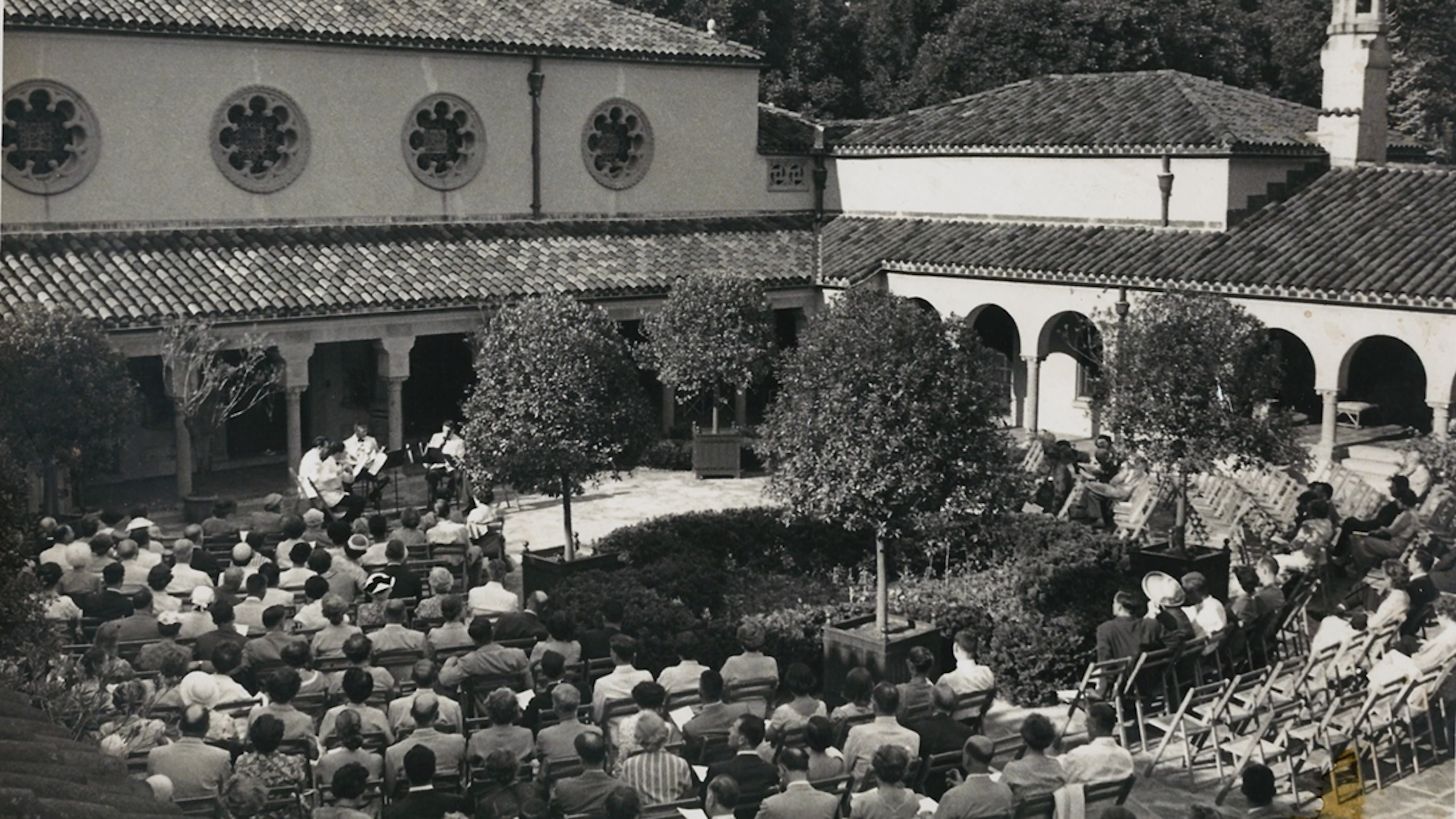
| ca 1942 |
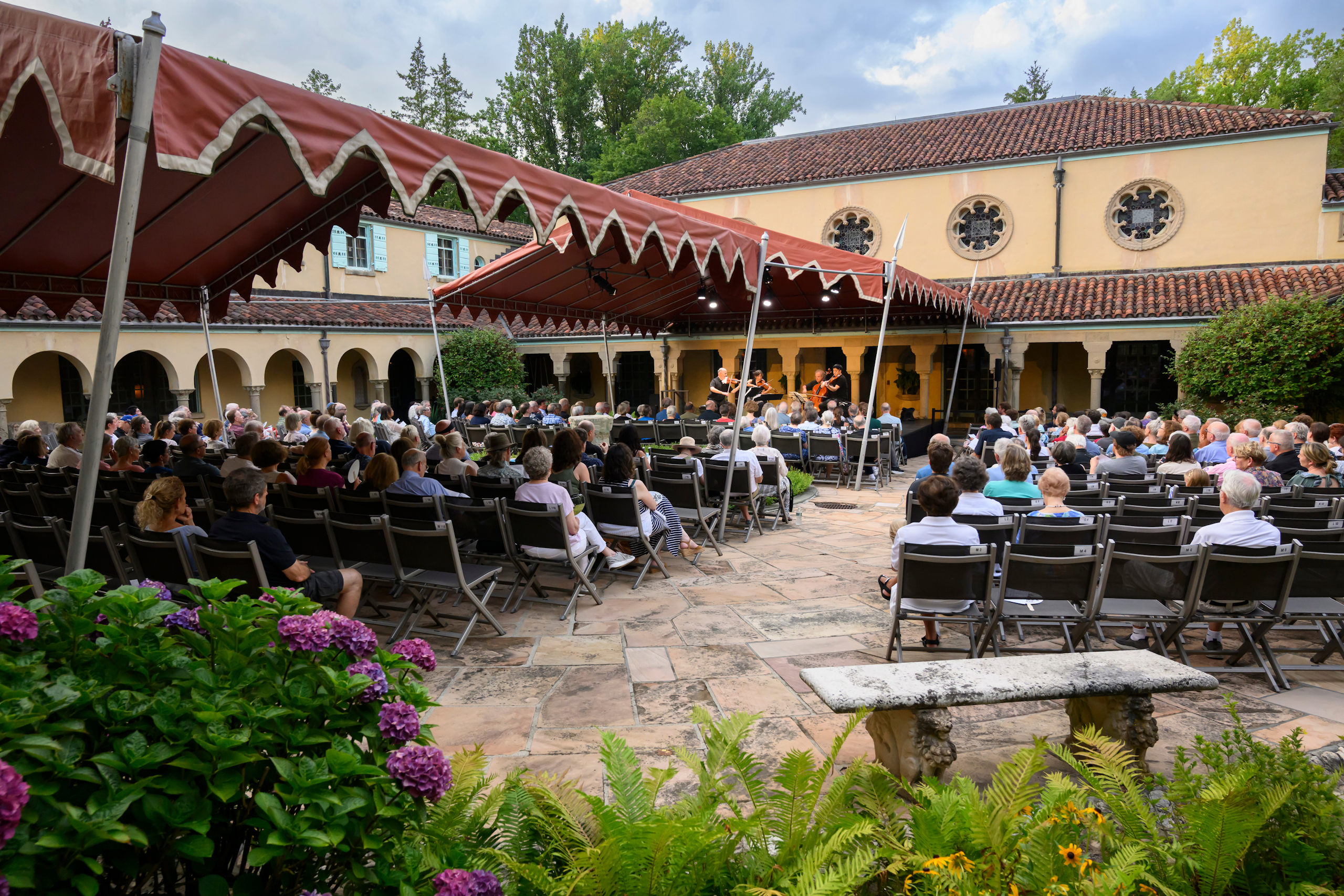
In 1945, the Rosens bequeathed the Caramoor estate as a center for music and art in memory of their son. The next year the Music Room was opened to the public for three summer concerts. The International Music Festival grew from those intimate concerts the Rosens shared with their friends at their home. After Walter Rosen died in 1951, Lucie Rosen continued to expand the Festival. During the 1950s, outdoor concerts were presented in the Spanish Courtyard. Caramoor’s fame continued to grow and seats became impossible to obtain. Prompted by The New York Times critic Howard Taubman, Lucie Rosen decided to make Caramoor more available to the public, and she had a larger space – the Venetian Theater – constructed. The theater opened in 1958.
The Caramoor museum was created in 1970, two years after Lucie Rosen’s death. The Rosens’ daughter, Anne Stern, and many professionals continued the task of cataloguing, conserving and interpreting the collection for several years afterward. In 1971 the house was opened to the public. In 1974 a new wing was added to include rooms and objects d’art from the Rosens’ New York City residence.
What is known as the Caramoor Center for Music and the Arts was originally created by a foundation established by the Rosens to operate the estate in perpetuity. Lucie Rosen once said that people feel they have gone to another country and another time when they visit Caramoor. Because the Rosens were touched by this, by the obvious pleasure their friends took in Caramoor’s beauty, they decided to leave their home as a legacy for all to enjoy after they had gone. It is to the vision and energy of this inspirational couple that thousands owe their enjoyment of Caramoor each year.
 |
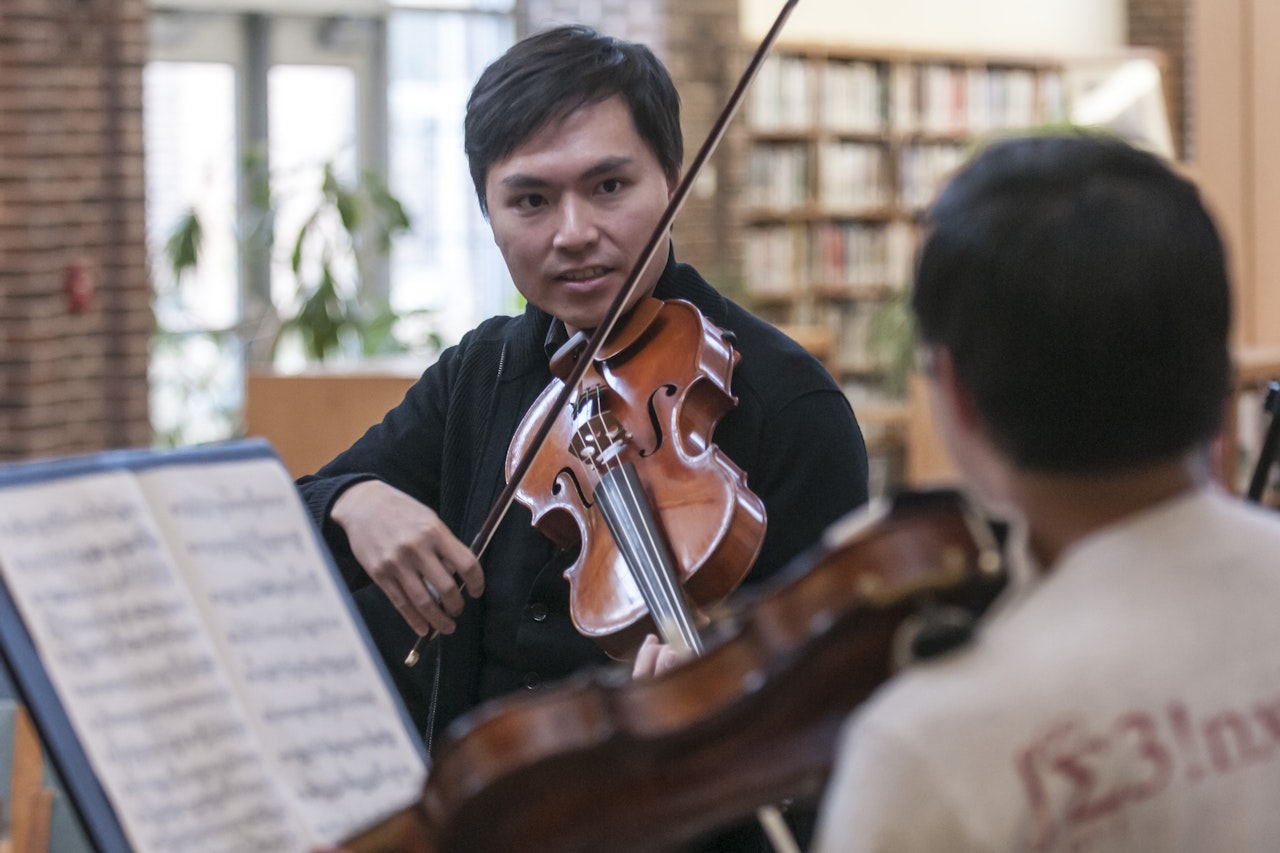
The Rosen House Today Caramoor Center for Music and the Arts has embarked on a comprehensive planning project to restructure the programs and usage of the historic Rosen House on Caramoor's 90-acre campus. During this re-evaluation period, tours and general public visitation programs have been suspended, but the Rosen House continues to serve the public as a venue for year-round concerts and as an engaging learning environment for the more than 5,000 local school children who take part in Caramoor's arts-in-education programs each year. The primary goal of this project is to create a seamless harmony between the public presentation of the Rosen House and the music based mission of Caramoor.
Since January 2010, consultants have been hired and a thorough examination of the house and its contents, including the Rosens’ correspondences, has begun. Already many long forgotten or unknown facts about the Rosens and their lives have been revealed. Through these discoveries, large and small, the role of the Rosen House will evolve and it will continue as the heart of Caramoor. While the public presentation of the Rosen House is being evaluated and updated, the structure is being inspected and detailed recommendations for repairs and maintenance are being catalogued. It is Caramoor’s intention to gather the funds and resources to undertake all necessary actions during the next few years.
Back to Top
|